Turning site experience into knowledge for the industry.
Technical knowledge on roofing systems developed and shared through articles, expert commentary, interviews, conferences, ÇATIDER initiatives and publications.
Sharing technical knowledge
We share site experience with the wider industry.
Articles, training sessions, interviews and meeting records on roofing and façade systems are presented with their technical subject, publication date and original source. This archive shows how our design and site experience is converted into knowledge for the wider industry.
Technical articles
Training and talks
Industry publications
Çatı ve Cephe · 22 August 2026
A Patch May Hold, but the Defect Remains: The Cost of Poor Detailing and Poor Repairs on Sandwich-Panel Roofs
Using two field cases, the article explains why recurring water ingress in sandwich-panel roofs cannot be solved by patching the visible symptom alone, and why panel joints, internal gutters, outlet capacity and previous local repairs must be assessed as one system.
Dr Atila Gürses contributed as an adviser to the workshop held under the “Green Roof Tarsus Project”, led by Tarsus Municipality’s Directorate of Strategy Development in partnership with the Tarsus Chamber of Commerce and Industry and supported by the European Union Climate Change Grant Programme. He moderated the session and compared his assessment reports for the working groups with the collective outputs, helping shape the technical decisions.
The Most Tangible Area for Climate Action: Roofs and Façades
Dr Atila Gürses discusses the role of roofs and façades in climate adaptation, the technical agenda of the 10th National Roof and Façade Conference and a performance-led approach to the building envelope.
Yağız Sinan Kaya examines the concealed technical causes of recurring roof problems from the perspectives of design, detailing, material compatibility and site inspection.
Yağız Sinan Kaya and Dr Atila Gürses examine water ingress, condensation, ventilation, valley, chimney and parapet problems in poorly designed roof systems, and explain how a roof consultant can reduce these risks through design review, detail development and site inspection.
Ten Questions on the Risks of Poorly Designed Roof Systems and the Contribution of a Roof Consultant
In Şantiye Magazine’s “Ten Questions” programme, Yağız Sinan Kaya and Dr Atila Gürses discuss the technical and financial risks created by poorly designed roof systems, insulation work and the contribution of independent roof consultancy to design and site delivery.
Roof Systems Are Among a Building’s Most Critical Performance Components
Yağız Sinan Kaya, founder of Butik Roof & Project Consultancy and Vice-Chair of ÇATIDER, discusses the role of roof systems in the building envelope, the effect of poor detailing on weather resistance and service life, and the value of independent roof consultancy during design and construction.
Yağız Sinan Kaya considers why energy-performance targets should be incorporated into specifications at an early stage, why roofing and building-envelope details require interdisciplinary co-ordination, and how workmanship quality can be made measurable.
From Roof to Summit: Materials and Technical Installation Training
ÇATIDER Vice-Chair Yağız Sinan Kaya, Dr Atila Gürses, Şimal Sarı and Mert Bıçakçı shared guidance on selecting appropriate roofing materials, current installation techniques and solutions to common site problems.
On ST Endüstri Radio’s Sustainable Cities and Buildings programme, Yağız Sinan Kaya and Dr. Atila Gürses discuss how roofs affect urban life, energy efficiency, building longevity, correct detailing and sustainable architecture.
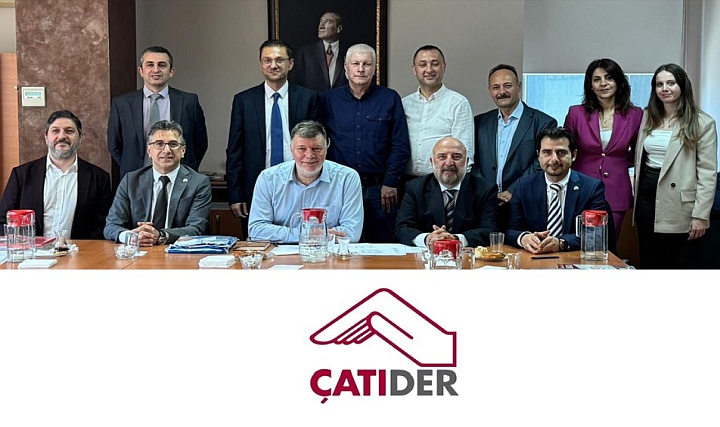
ÇATIDER and Istanbul Chamber of Commerce 47th Professional Committee Sector Meeting
The meeting, attended by Yağız Sinan Kaya and Dr Atila Gürses, addressed technical competence, installation quality, training and market conditions in the roofing industry.
In Export Markets, Service Quality Matters as Much as Product Quality
Yağız Sinan Kaya explains why the performance of exported construction products must be supported by skilled installation, a trained workforce and after-sales technical service.
2025 Will Be a Year of Innovation and Transformation in the Roofing Industry
Yağız Sinan Kaya assesses the roofing industry’s 2025 transformation through sustainability, energy efficiency, innovative materials, smart-building technologies, quality standards and international cooperation.
2025 Roof & Façade Materials Awards Presented at the Awards Ceremony
ÇATIDER Vice President Yağız Sinan Kaya presented the Roof Material of the Year award to Kılıçoğlu Kiremit and the Roof System Component of the Year award to Megaron Çatı Teknolojileri.
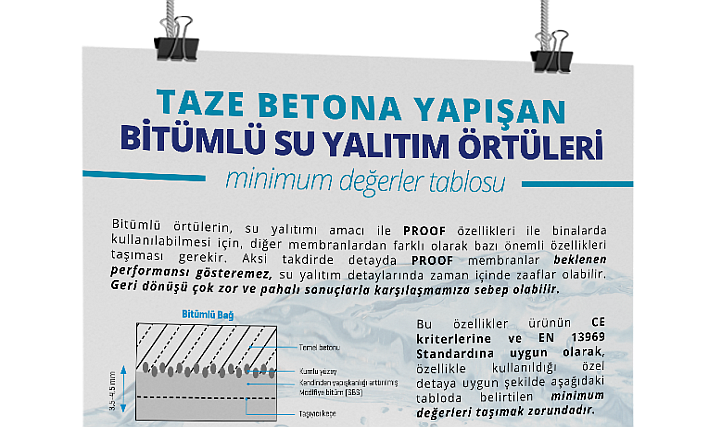
Not Every Sand-Faced Membrane Is a Pre-applied, Fully Bonded Waterproofing Membrane
Dr Atila Gürses explains the technical criteria for assessing pre-applied, fully bonded waterproofing membrane systems, including product definition, adhesion to concrete, installation conditions and correct product selection.
A Building Without Waterproofing Cannot Maintain Its Seismic Performance
Dr Atila Gürses examines the long-term effect of water on the structural frame, corrosion risk and the role of waterproofing in preserving a building’s seismic performance.
Aesthetics and Durability in Modern Architecture: Titanium Zinc Standing Seam Roofs
Yağız Sinan Kaya examines the material properties of titanium zinc standing seam roofs, structural calculations and substrate requirements, installation methods and the site quality assurance required to achieve high-quality workmanship.
Yağız Sinan Kaya discusses the applications, technical properties and correct installation conditions of aluminium roofing, including the importance of sheet thickness, concealed clips, the supporting substrate and workmanship quality.
Atila Gürses, Chair of ÇATIDER and Technical Co-ordinator at Onduline Avrasya
A profile of Dr Atila Gürses covering his architectural and academic work, technical management experience in roofing and insulation, work with ÇATIDER, international training activity and interest in Turkish music.
Atila Gürses discusses professionalisation of the roofing industry, vocational training, installation standards and the association’s technical work during his term as Chair of ÇATIDER.
Confidentiality principleClient reports are not published publicly because they contain project and building information. Only the reporting standard used by Butik Roof & Project Consultancy and anonymised technical examples are shown here.
Report structure
Scope of appointment and available documents
Site-survey method and measurement records
Photographic findings and location references
Risk grading and order of priority
Technical recommendations and alternative solutions
Deliverables, limitations and next steps
Survey Method
Documents first, then the site, followed by technical assessment.
Design and repair records are reviewed; geometry, falls, water paths, valleys and gutters, junctions and accessible build-up layers are recorded by measurement and photography.
Findings and Risk Grading
HighActive water ingress, a risk to life or property, or rapid deterioration. Urgent action is required.
MediumA non-conformance that is not yet causing active damage but reduces service life and system performance.
LowA finding relating to maintenance, workmanship or monitoring that can be managed through planned remedial work.
Illustrated Defect Example
Failure to direct water mechanically at a critical junction
Primary weathering around chimneys, parapets, valleys and rooflights must be achieved by continuous folded metalwork configured to the direction of water flow and completed with an appropriate counter-detail—not by exposed fixings or surface-applied sealant. Sealant may be used only at supplementary locations approved by the manufacturer; exposed screws and open penetrations must not remain in the outer covering.
Example Technical Recommendation
Open up the defective junction and inspect the underside, separation layer and supporting substrate. The replacement detail must allow for capillary rise and backed-up water; metal components are mechanically folded with adequate laps and cover. Fixed and sliding clips, tray lengths and the direction of thermal movement are reconfigured in accordance with the manufacturer’s details.
Report Deliverables
PDF technical survey report
Numbered site photographs
Findings–risk–recommendations schedule
Prioritised remedial action plan
Detail sketches and approximate quantities where required
Report scope, access limitations and limits of responsibility